
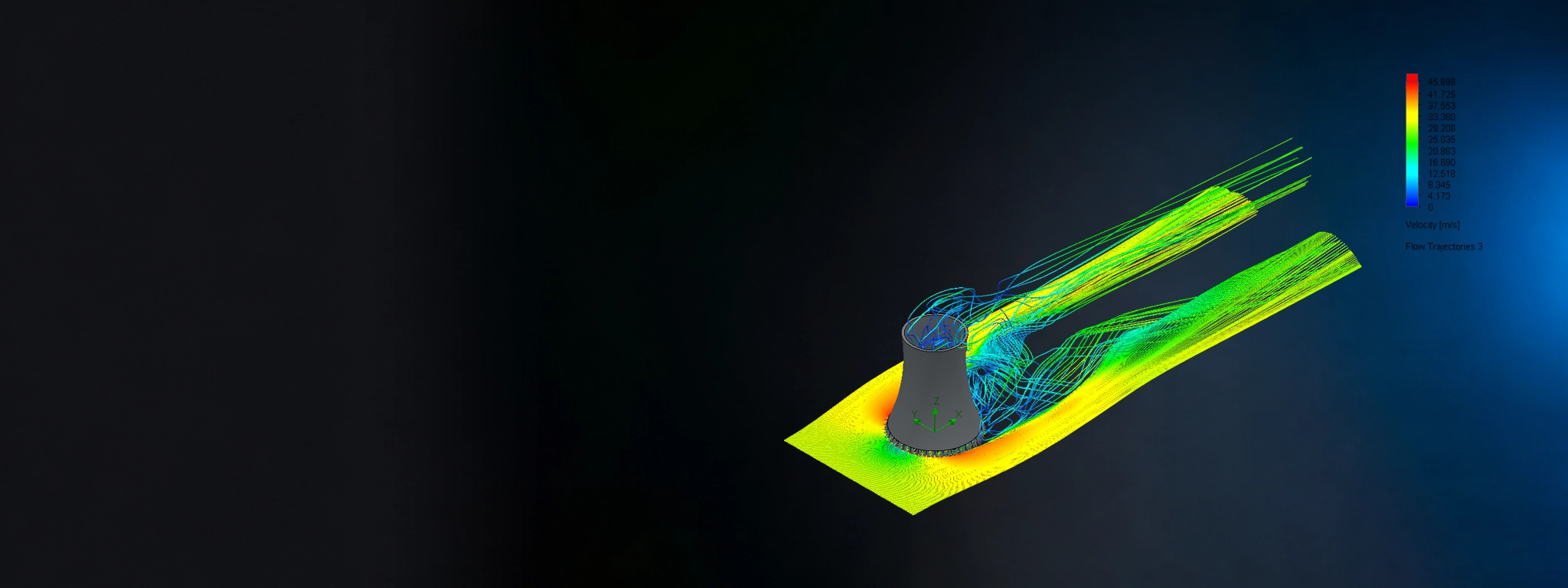
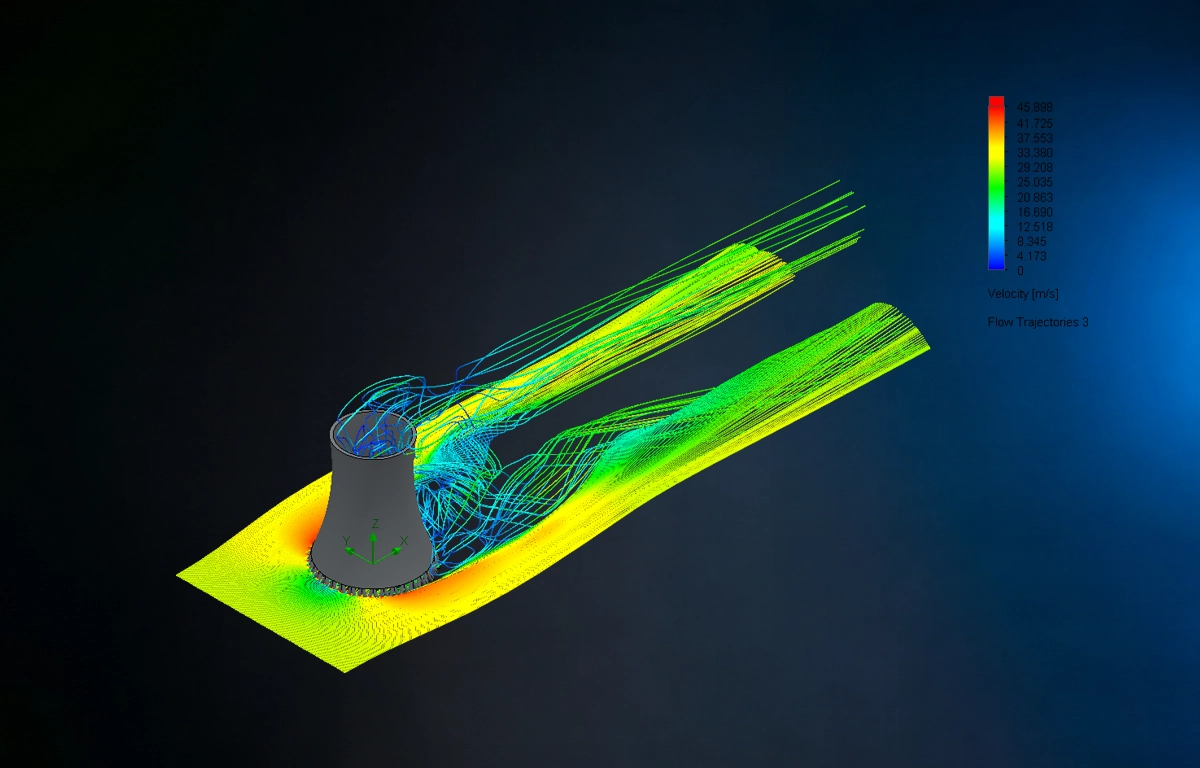
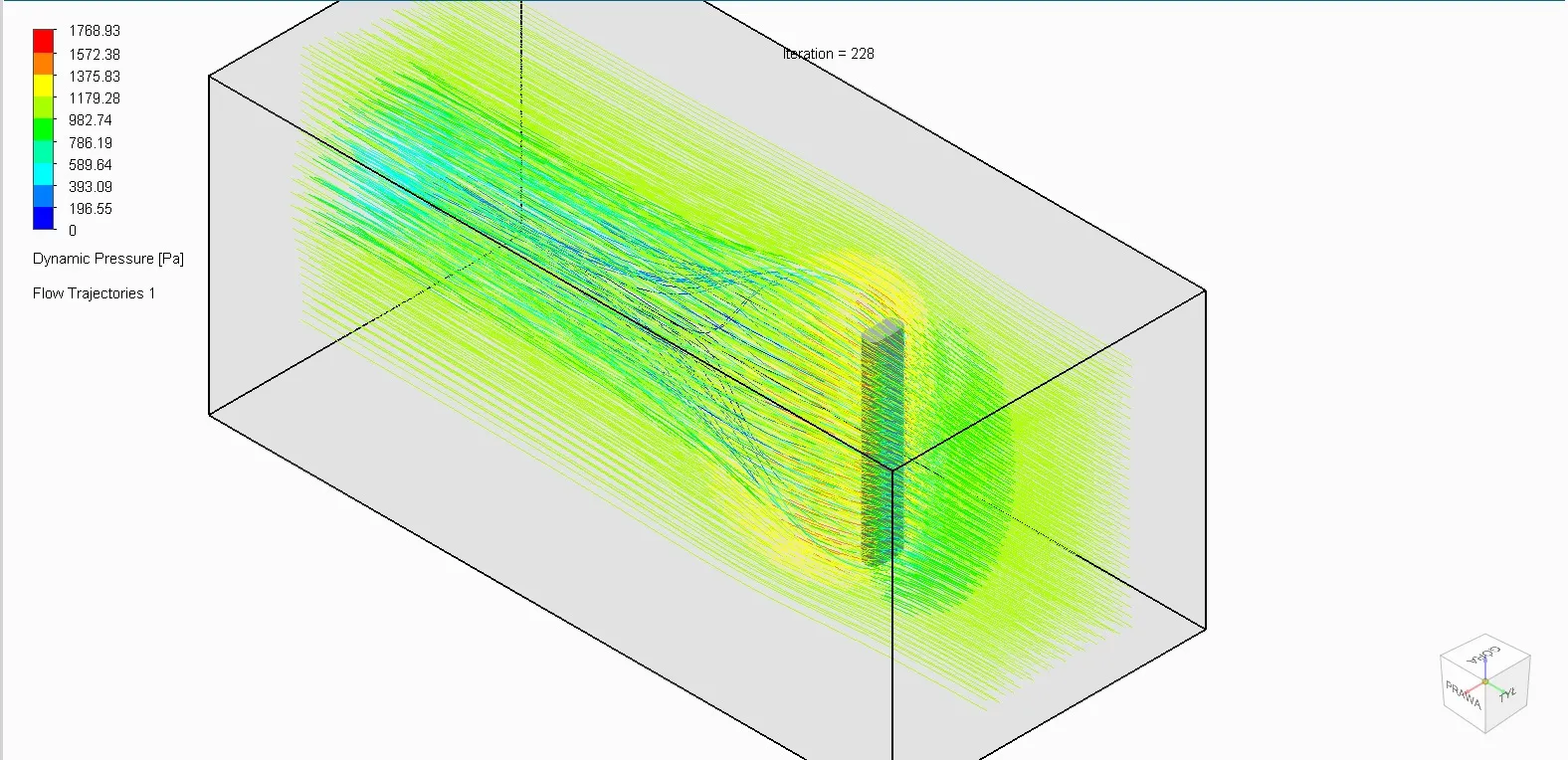
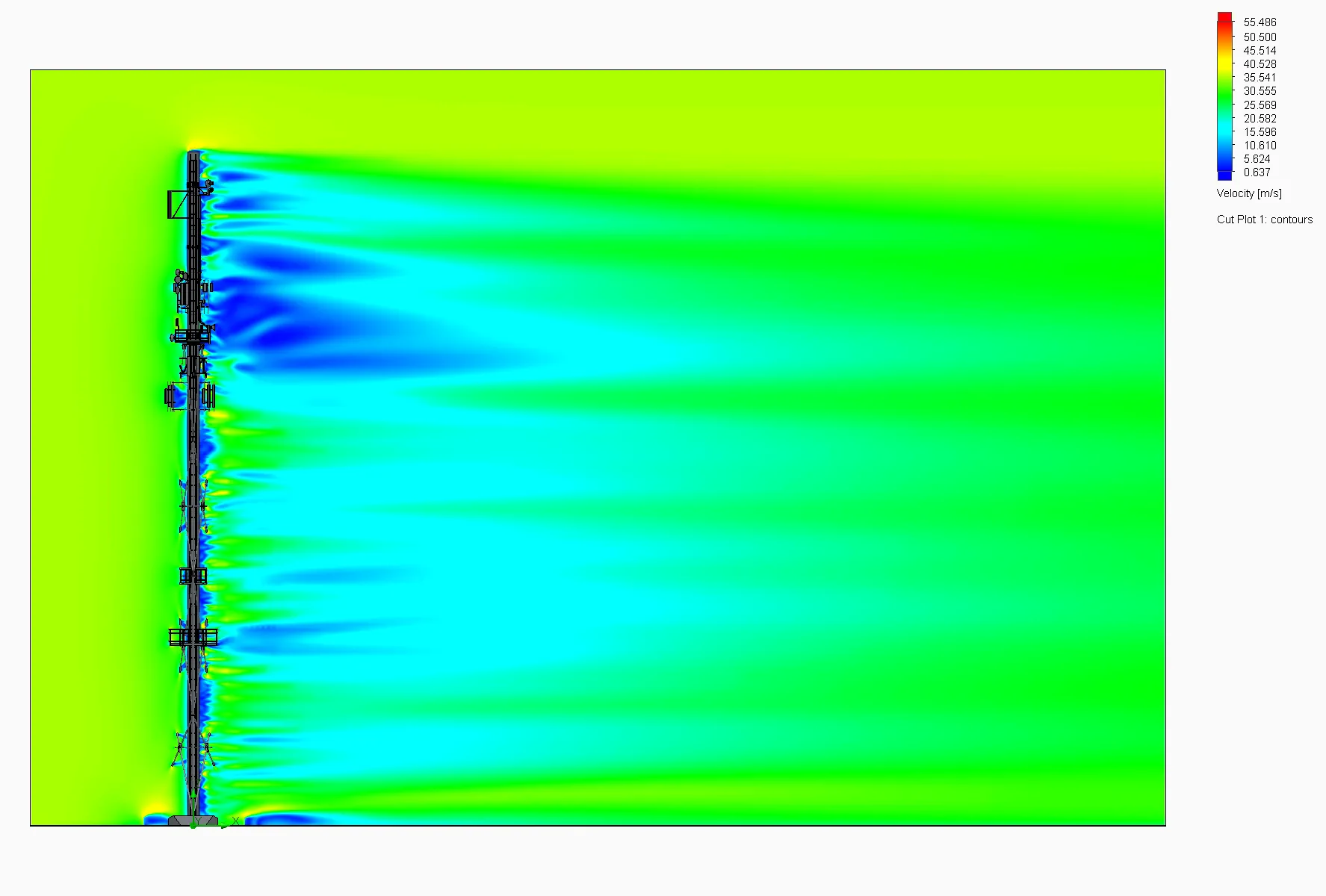
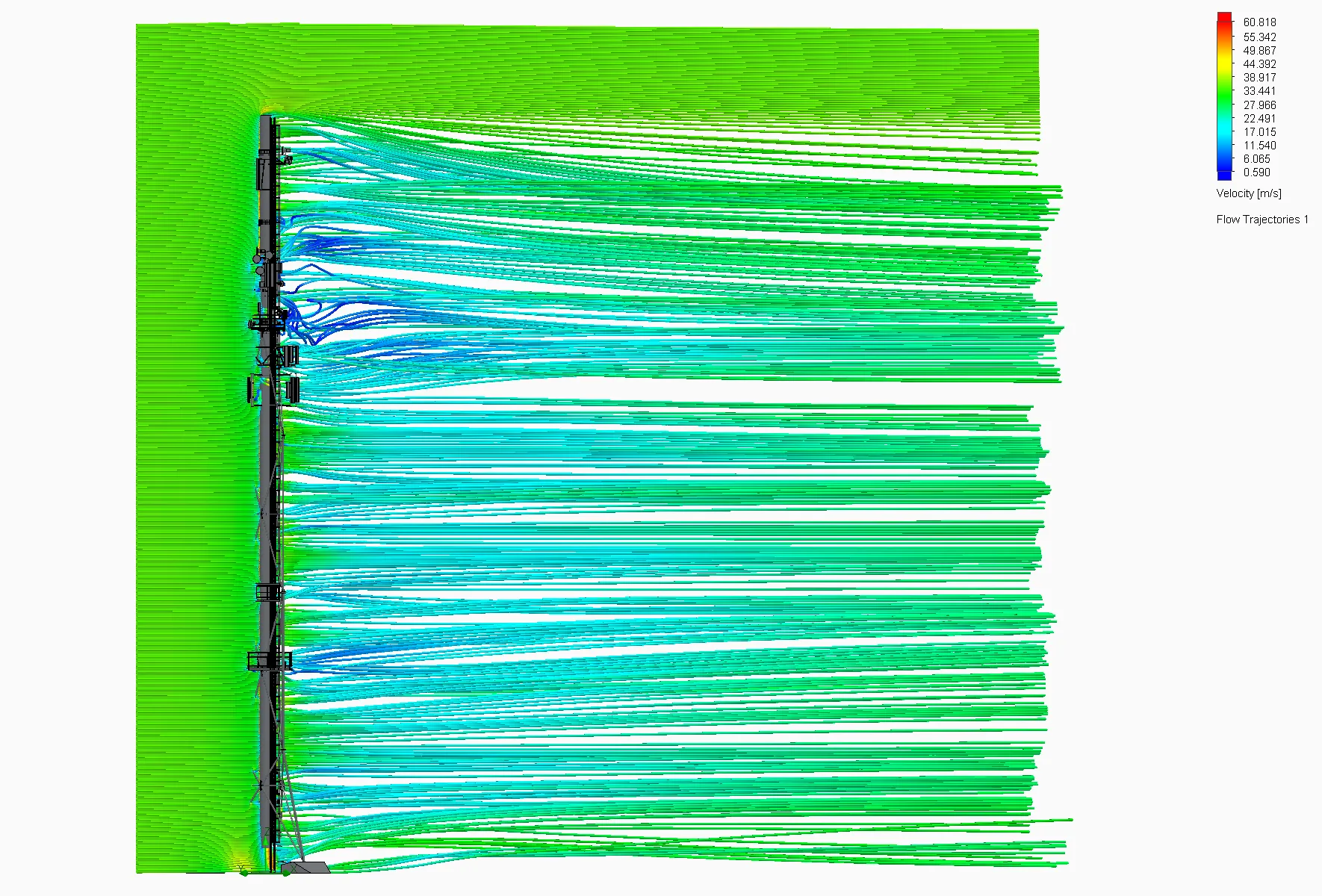
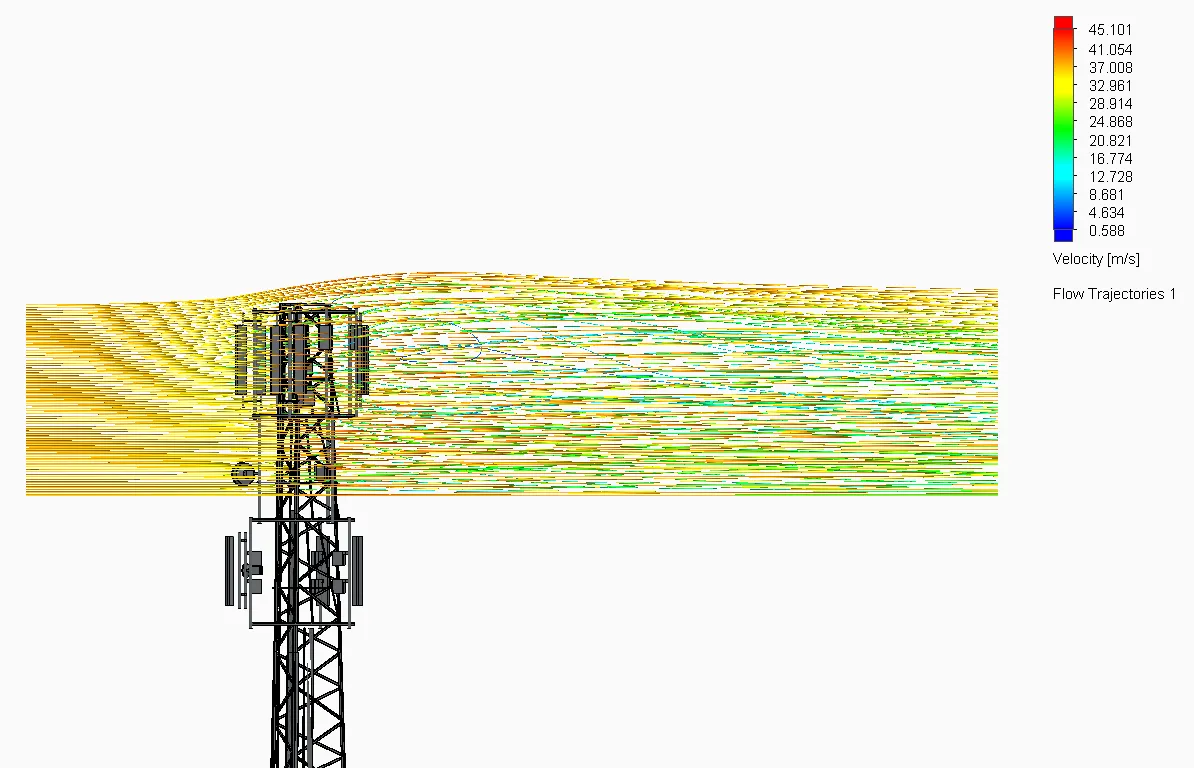
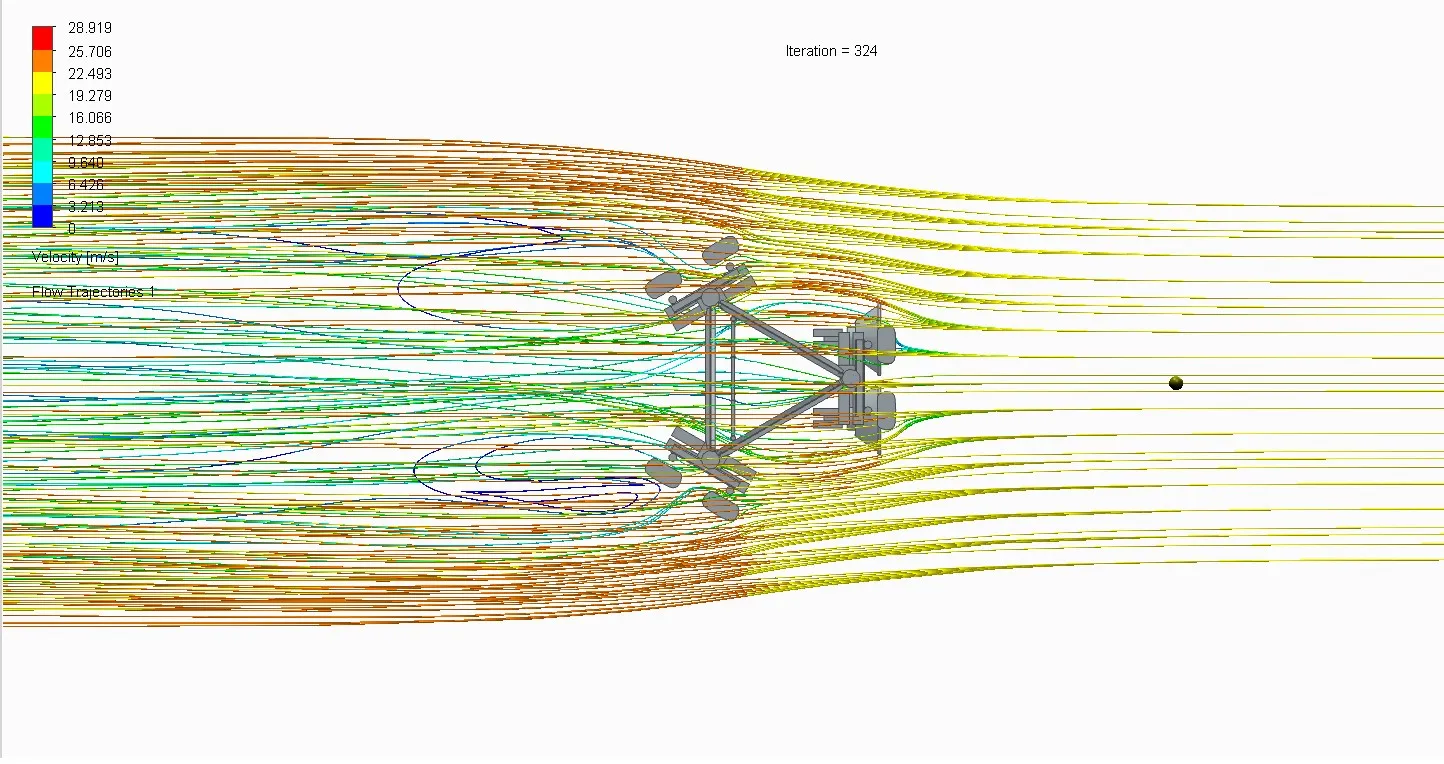
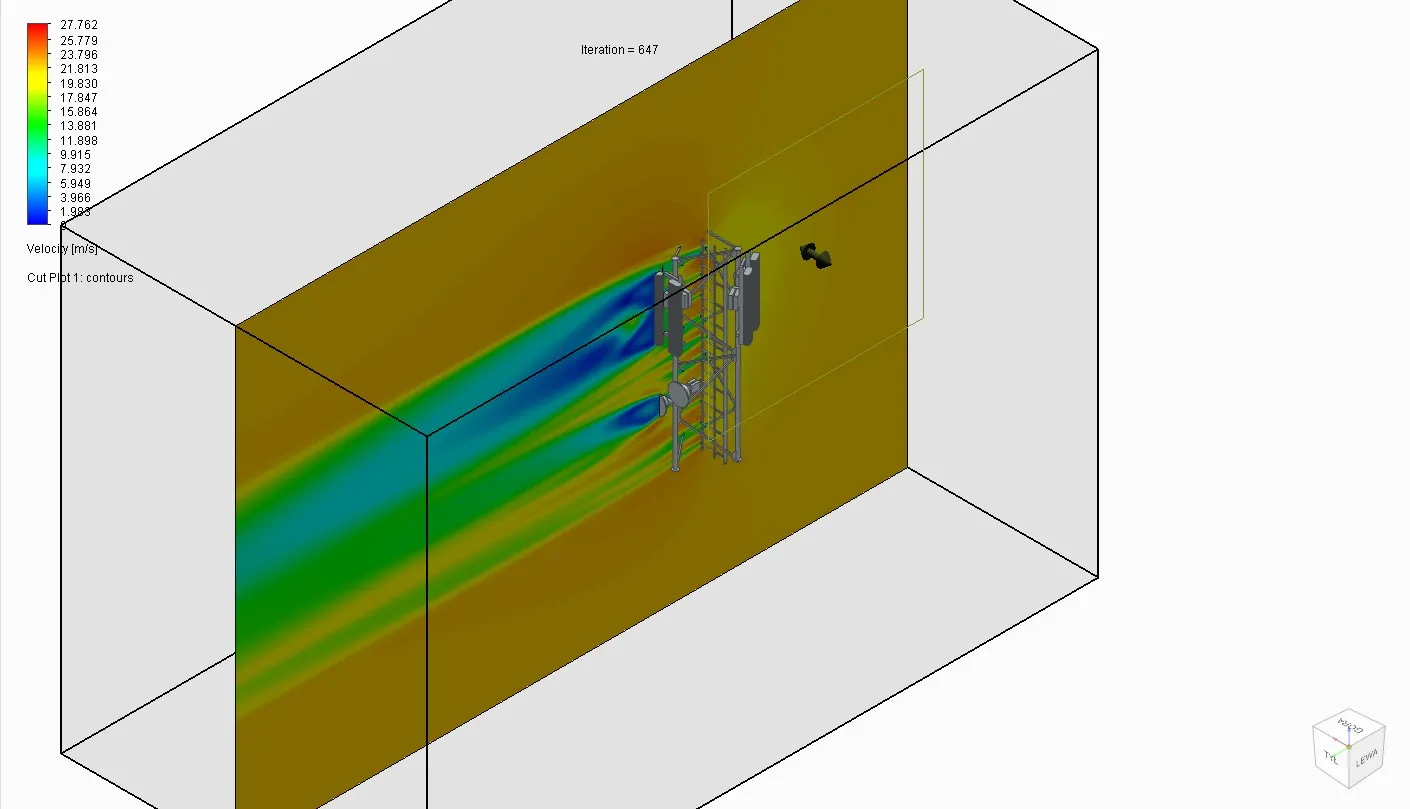
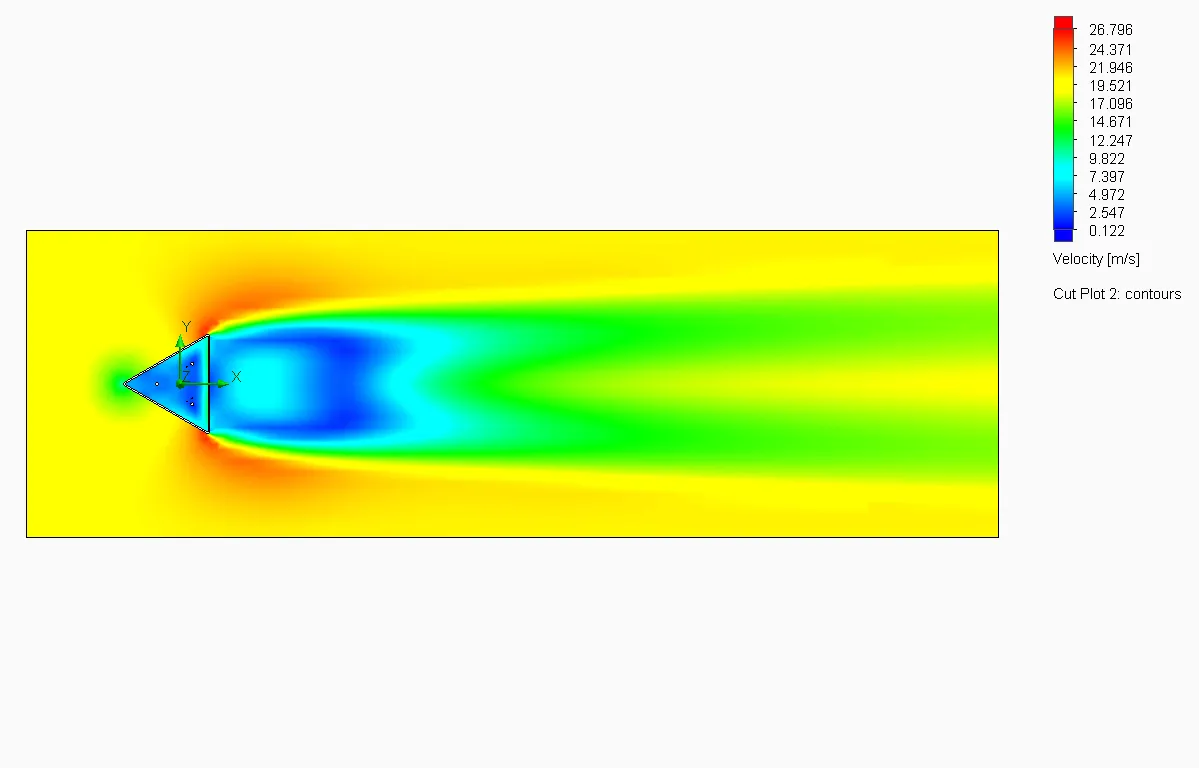
CFD analyzes are a virtual wind tunnel in which we test a selected 3D element. The use of CFD flow analyzes in the design of building structures allows for the realization of the forces generated by the wind acting on the structure. Classical methods of determining forces on structure elements are based on many, often protective, assumptions and simplifications. Thanks to CFD analyses, we can analyze any geometric shape with high precision and obtain the forces generated by the action of wind.
CFD analysis
CFD (Computational Fluid Dynamics) analyzes are advanced numerical techniques that enable detailed modeling and simulation of liquid and gas flows in various environments. Using computational methods, they analyze the interactions of fluids with the environment, which allows them to predict their behavior in various conditions.
In the context of construction, CFD analyzes act as a virtual wind tunnel, allowing selected 3D elements to be tested for the effects of wind and other environmental factors. Thanks to this method, it is possible to precisely determine the loads acting on building structures, eliminating the need to use safety assumptions and simplifications. These analyzes also allow for the design of lighter and more economical structures and shortening the investment process in the case of reconstructions or superstructures of existing facilities.
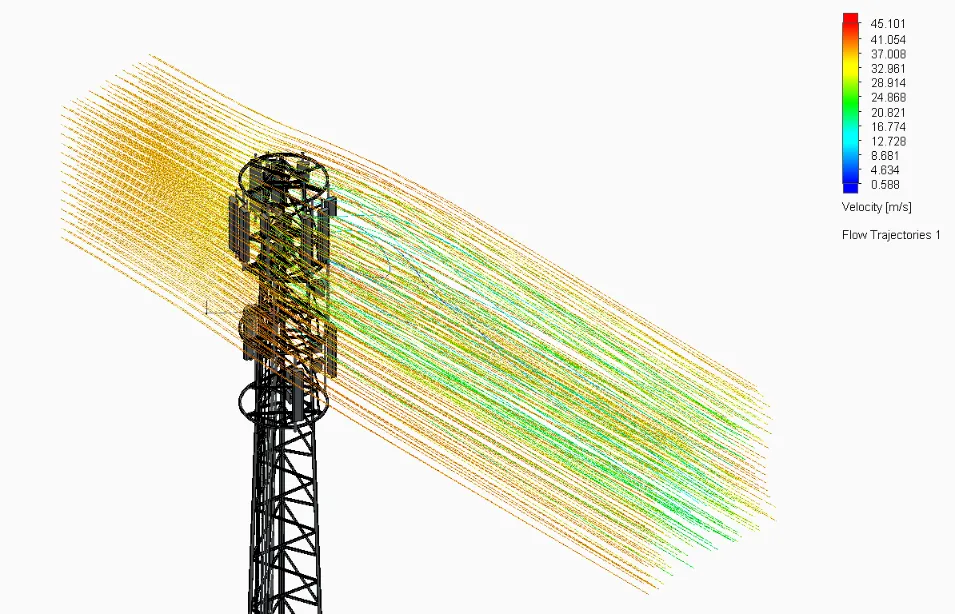
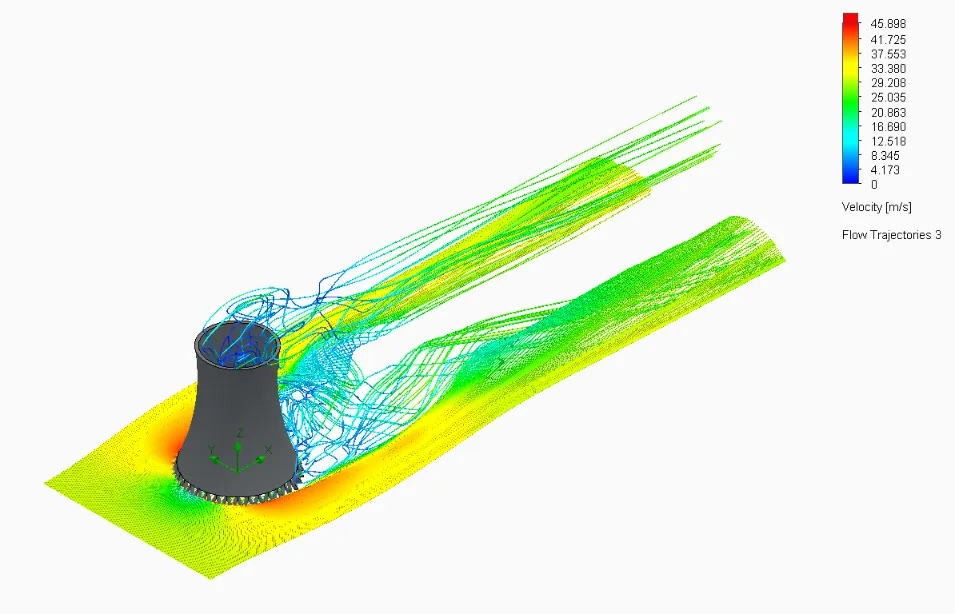
CFD analyzes are particularly useful in industries such as construction engineering, energy, automotive and aviation, where precise modeling of fluid flows is crucial for the effectiveness and safety of the designed solutions.
Design supported by CFD flow analyses
The use of CFD analysis is very wide. It is possible to use the results from CFD analysis to design structures, but also to optimize the arrangement of elements generating the greatest load in order to reduce the value of this load. We analyze gas and liquid flows as well as internal and external flows.
The use of CFD analyses
CFD analysisWe carry out the analysis in Solid Edge with the FloEFD flow analysis add-on.
Examples of benefits of using CFD flow simulation:
- Precise determination of loads on elements without the need to use safety simplifications and assumptions
- Possibility to determine the load for any complex assembly, basically without geometric limitations
- Possibility to design lighter, more economical structures
- Possibility of shortening the investment process in the case of reconstructions, reinforcements or additions to existing facilities
Also check out the offer for:FEM analyses
Photo gallery
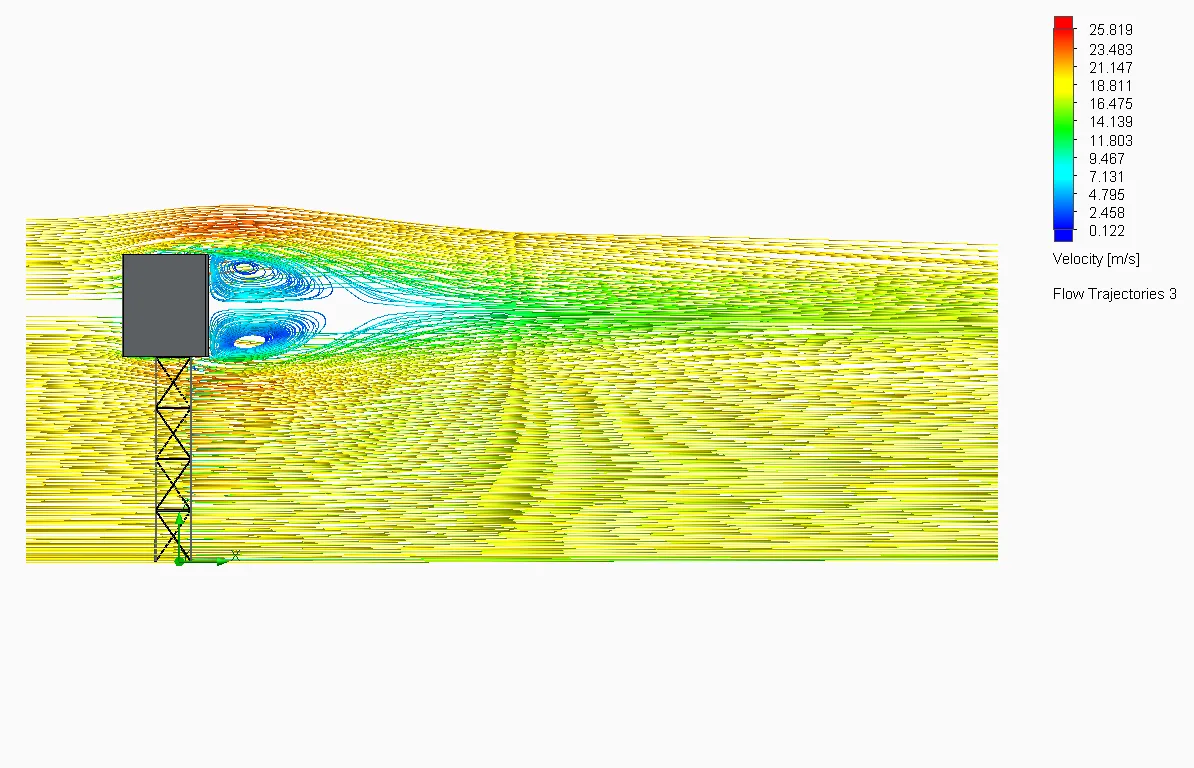
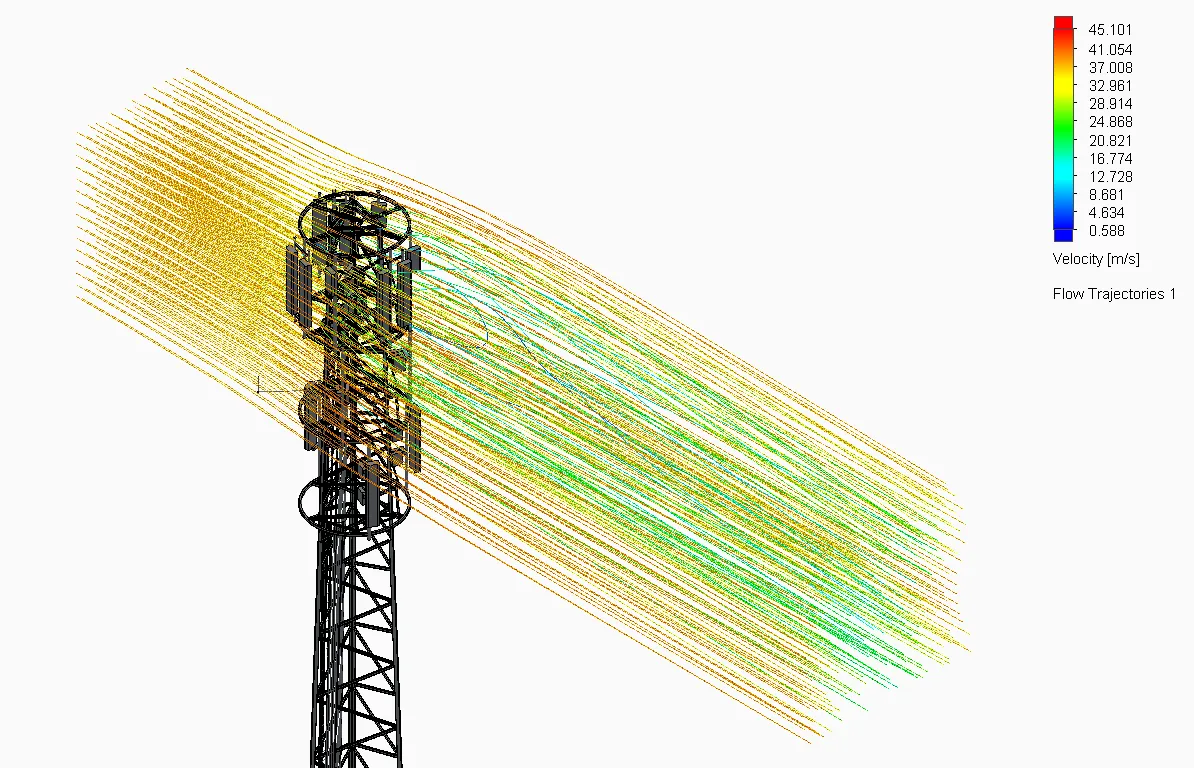
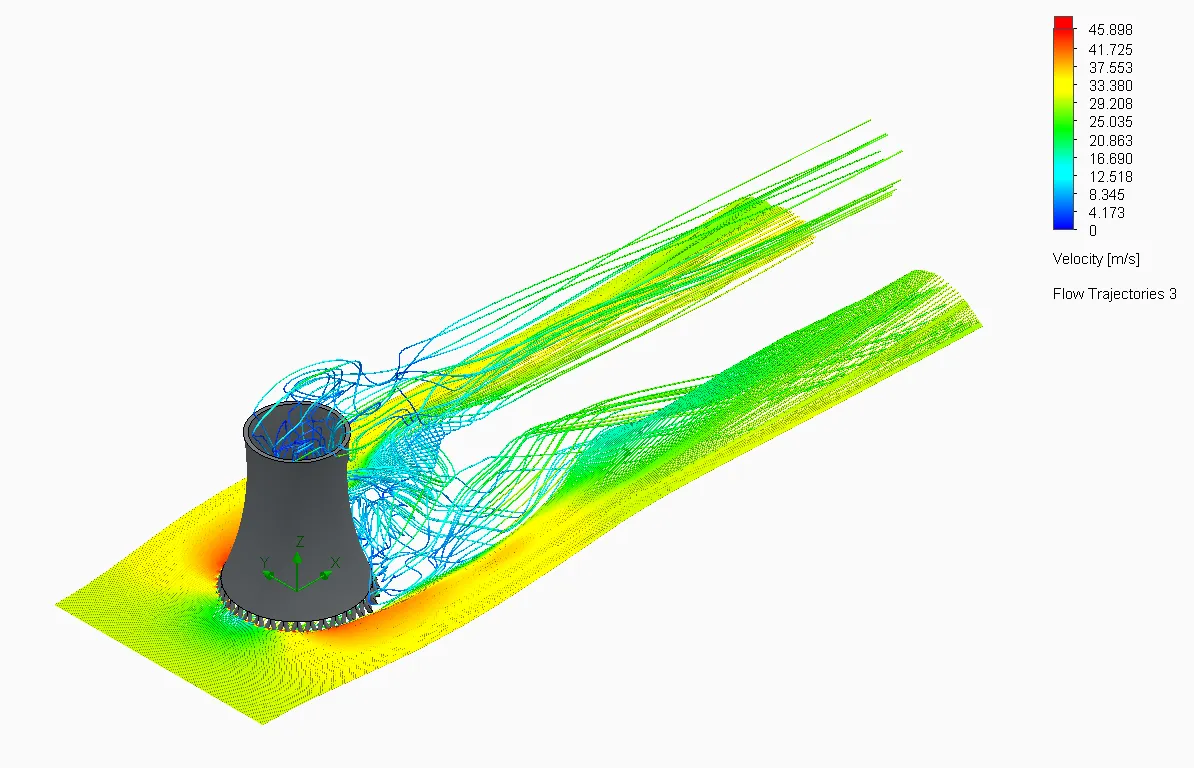
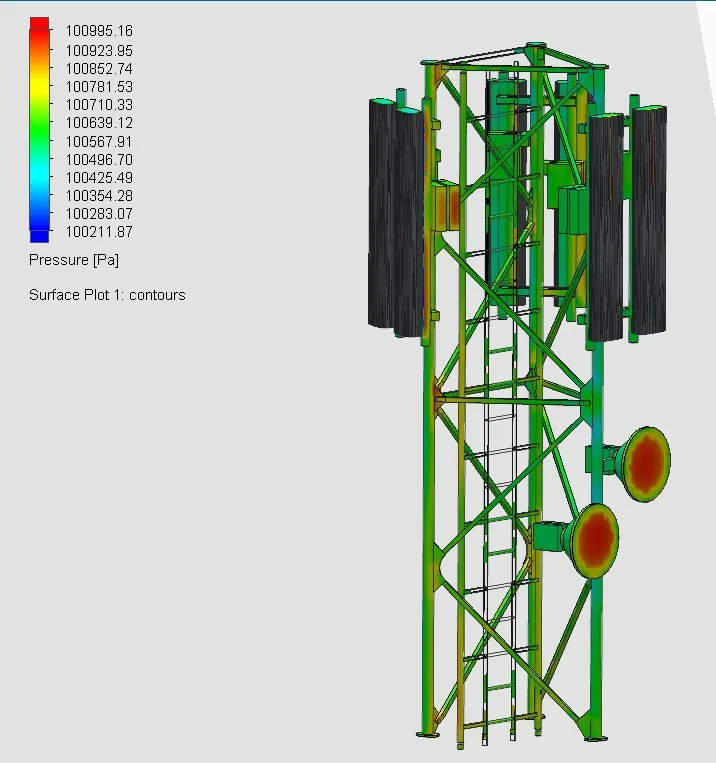
FAQ
What is CFD analysis?
CFD (Computational Fluid Dynamics) analysis is an advanced numerical method that allows you to simulate the flow of liquids and gases using computer models. Thanks to it, you can analyze, among others: air flow, pressure distribution, speeds and the impact of fluids on structures or devices. CFD simulations allow you to predict the behavior of flows in various conditions without the need to perform expensive physical tests.
What are CFD analyzes used for?
CFD analyzes are used wherever the flow of air, gases or liquids is important. They are most often used in construction, energy, aviation, automotive and industry. Thanks to simulations, you can analyze the aerodynamics of objects, the efficiency of ventilation installations and the impact of wind on structures.
How do CFD flow simulations work?
CFD simulations involve solving equations that describe fluid motion, such as the Navier-Stokes equations. The computer divides the analyzed 3D model into a computational grid and calculates flow parameters for each element, such as speed, temperature and pressure. Thanks to this, it is possible to predict the flow behavior around the tested object very precisely.
Why is it worth performing CFD analysis at the design stage?
Performing CFD simulations already at the design stage allows you to detect potential aerodynamic or flow problems before building a prototype. Thanks to this, it is possible to optimize the shape, reduce flow resistance and improve the efficiency of the designed solutions, which significantly reduces the costs and investment implementation time.
What are the benefits of airflow analysis using CFD?
CFD air flow analysis allows, among others:
- precisely determine the aerodynamic loads acting on the structure,
- optimize the shape of structural elements,
- improve the efficiency of ventilation systems,
- reduce energy consumption in industrial installations,
- reduce the need to perform tests in a wind tunnel.
Can CFD analyzes replace wind tunnel tests?
In many cases, CFD simulations can act as the so-called virtual wind tunnel. They allow you to test different design variants and quickly analyze the impact of geometric changes on air flow. Physical tests are still used in the final stages of a project, but CFD significantly reduces their number.
What elements can be analyzed using CFD?
Both external and internal flows can be studied using CFD analyses. The analysis covers, among others:
- buildings and structures exposed to wind,
- ventilation and air conditioning installations,
- industrial equipment,
- flow channels and pipeline systems,
- aerodynamic elements in automotive or aviation.
Does CFD analysis allow you to optimize the design?
Yes. One of the greatest advantages of CFD simulation is the ability to optimize the structure before it is made. Flow analysis allows you to identify areas that generate the greatest loads or resistance, which allows you to make changes to the design and improve its efficiency.
How long does it take to perform a CFD analysis?
The time needed to complete a CFD analysis depends on the complexity of the model, the number of analyzed variants and the required calculation accuracy. Simple simulations can be completed in a few days, while more complex designs requiring many iterations can take several weeks.
When is it worth commissioning a CFD simulation?
It is worth performing CFD simulation in particular when:
- the designed structure is exposed to strong wind,
- it is necessary to optimize the flow of air or liquid,
- reducing prototyping costs is required,
- a thorough aerodynamic or thermal analysis of the system is needed.
Latest projects

Self-erecting, mobile telecommunications mast
