
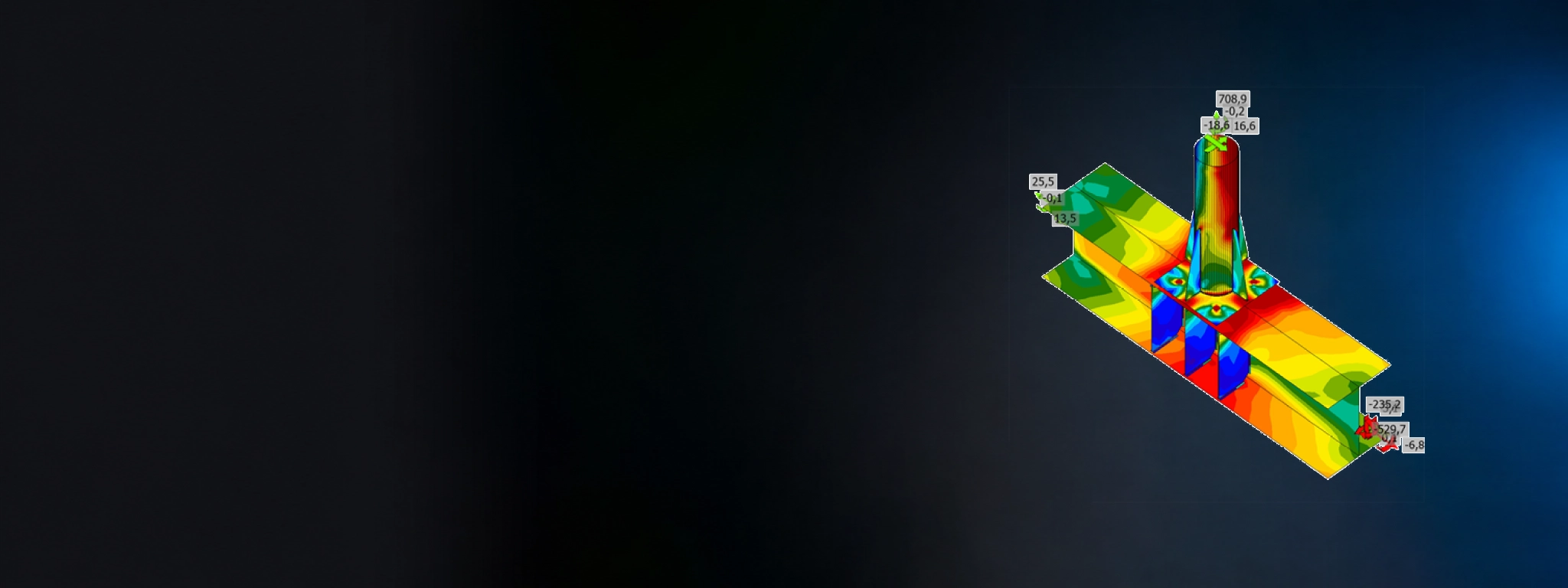
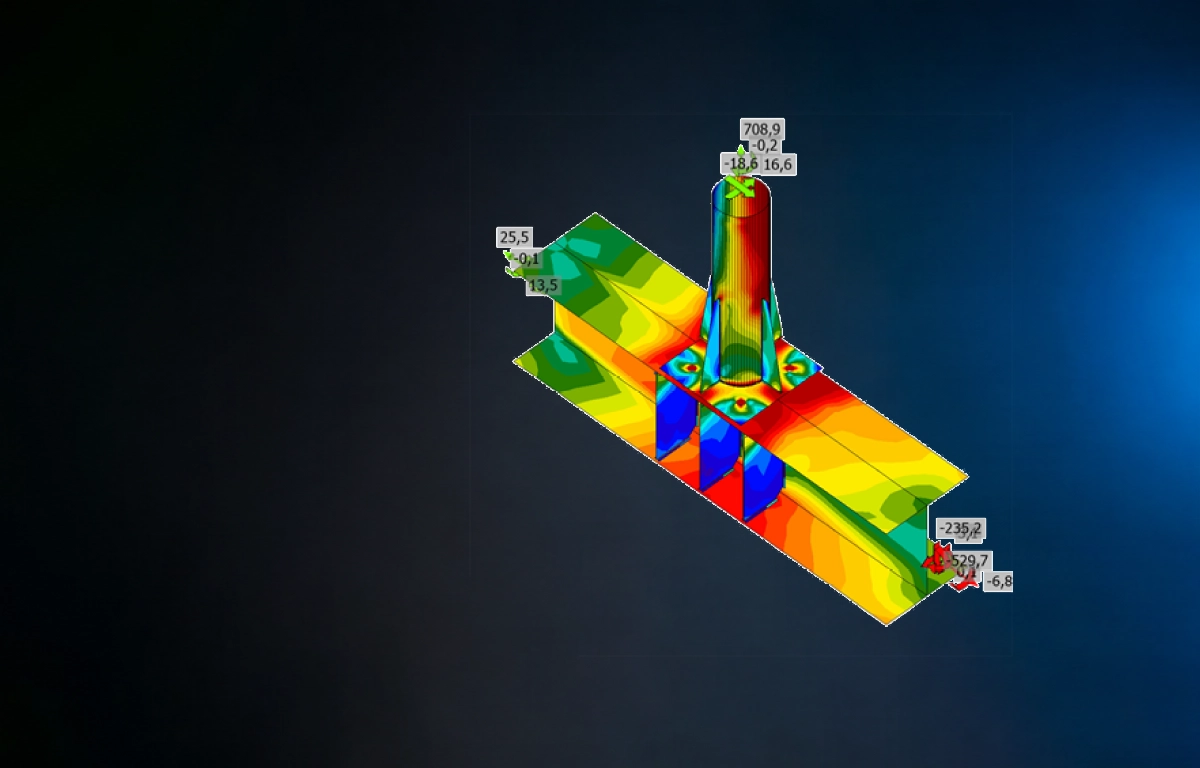
FEM analysis is an advanced simulation technique that allows for detailed analysis of the strength and behavior of structures under various loads. By dividing objects into small finite elements, it is possible to precisely determine stresses, deformations, and critical points in designed structures.
FEM analyses
In engineering practice, FEM analyses enable predictions of how materials and structures will behave under real-world operating conditions—without the need for costly and time-consuming prototyping. This technique is used in the design of buildings, bridges, machinery, and industrial components, enabling optimization of strength and reduction of material consumption.
FEM analyses enable simulation of dynamic loads, vibrations, and the effects of forces acting at various points in a structure, increasing the safety and durability of designed solutions. FEM analyses are a tool that allows engineers to create more efficient, economical, and safe structures, minimizing the risk of failure and design errors.
MES analyzes - scope of services
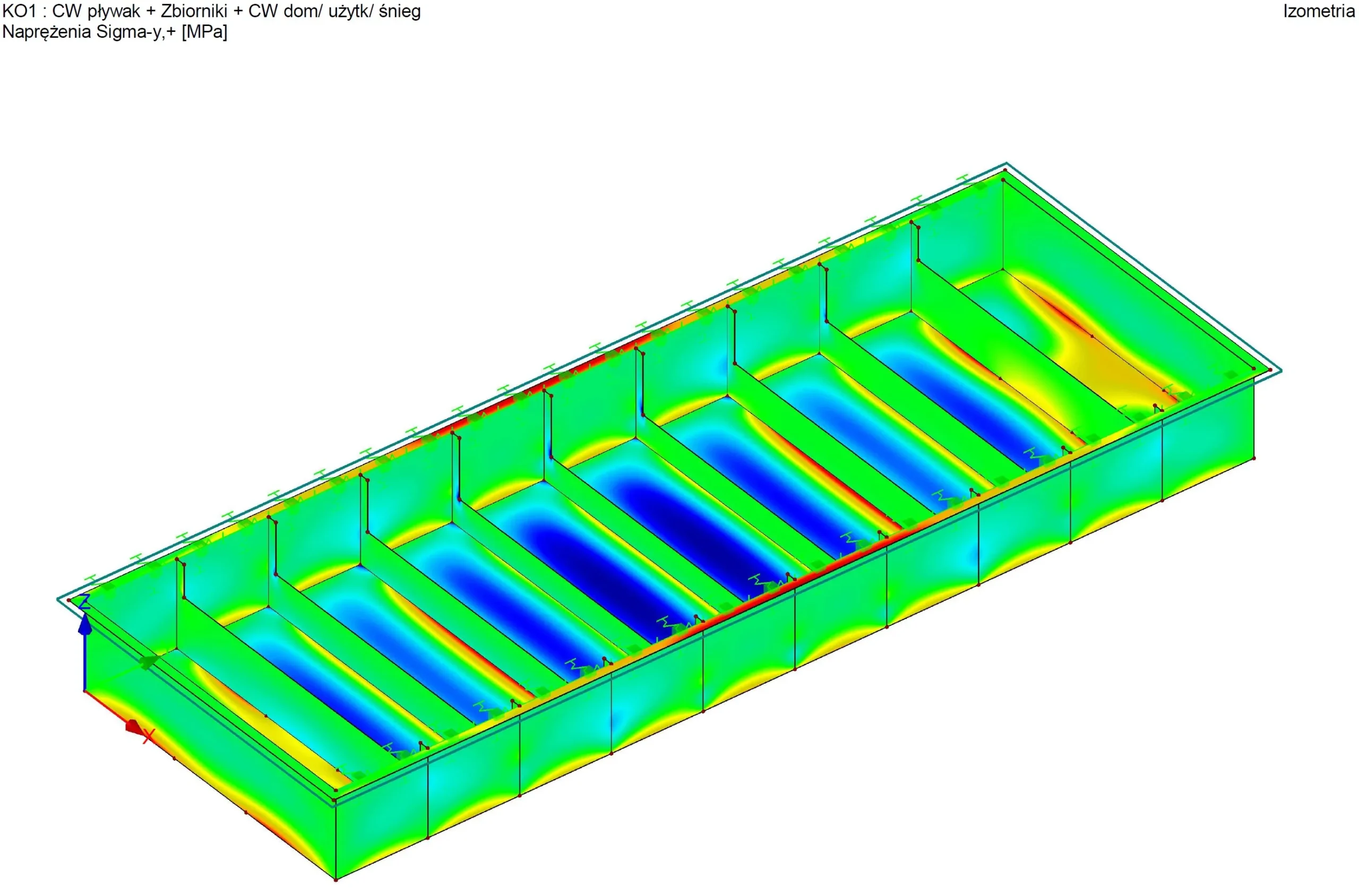
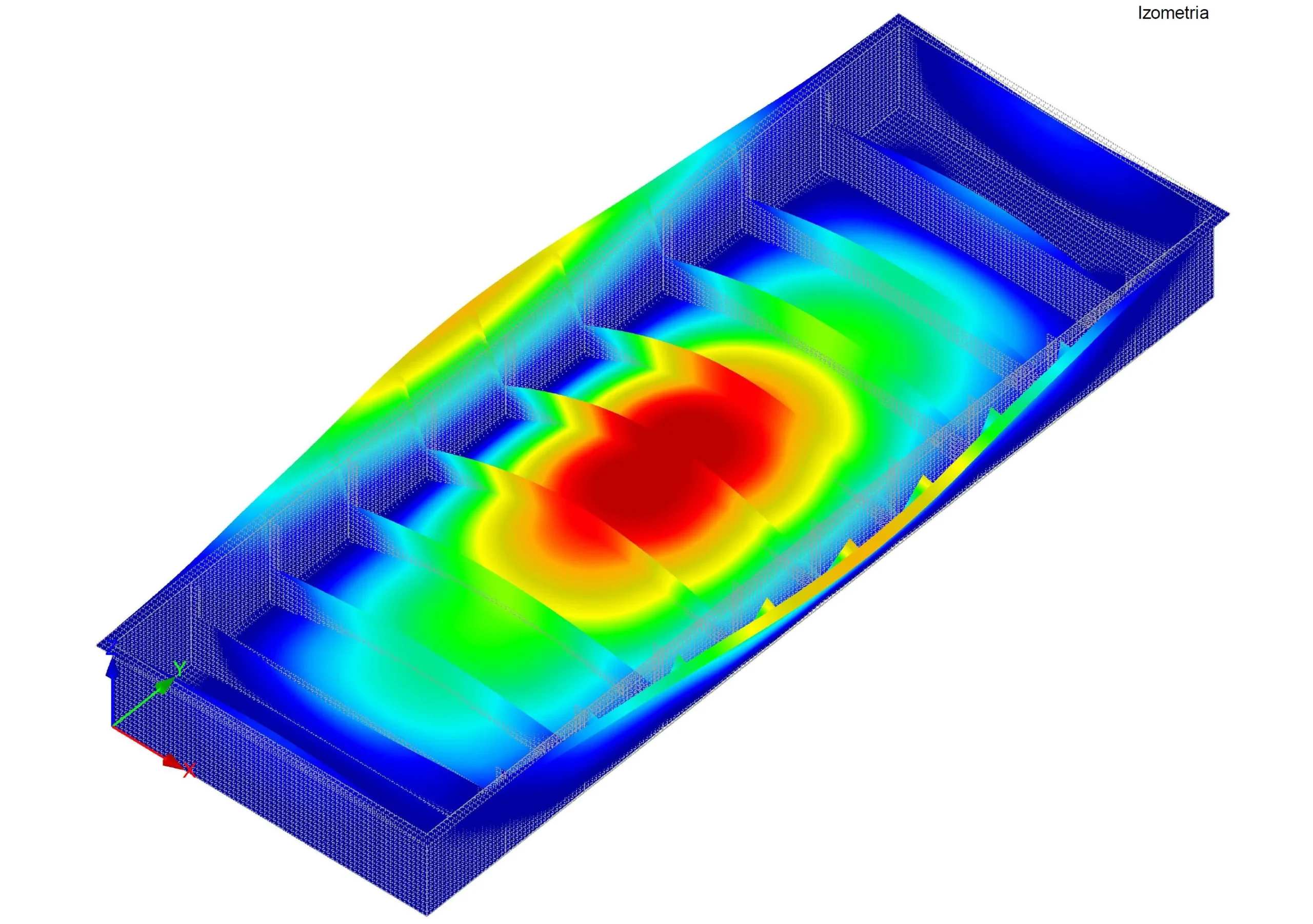
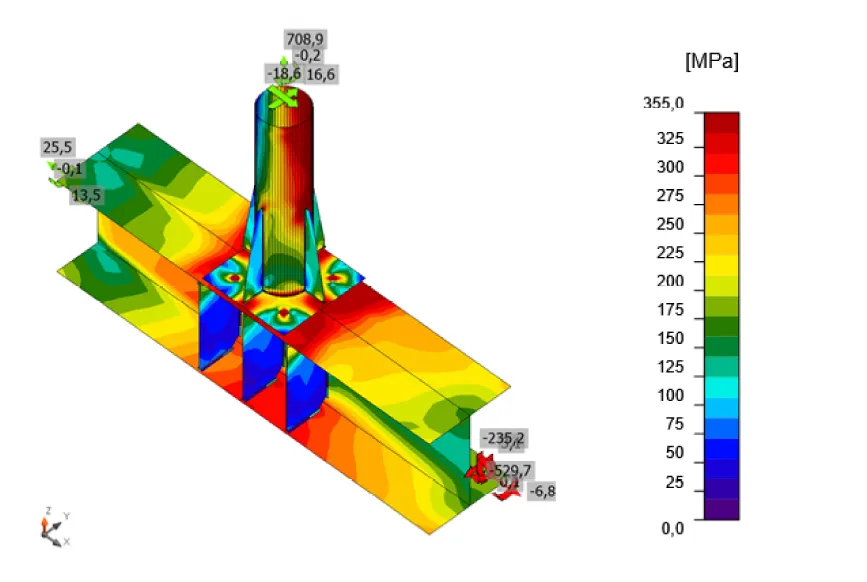
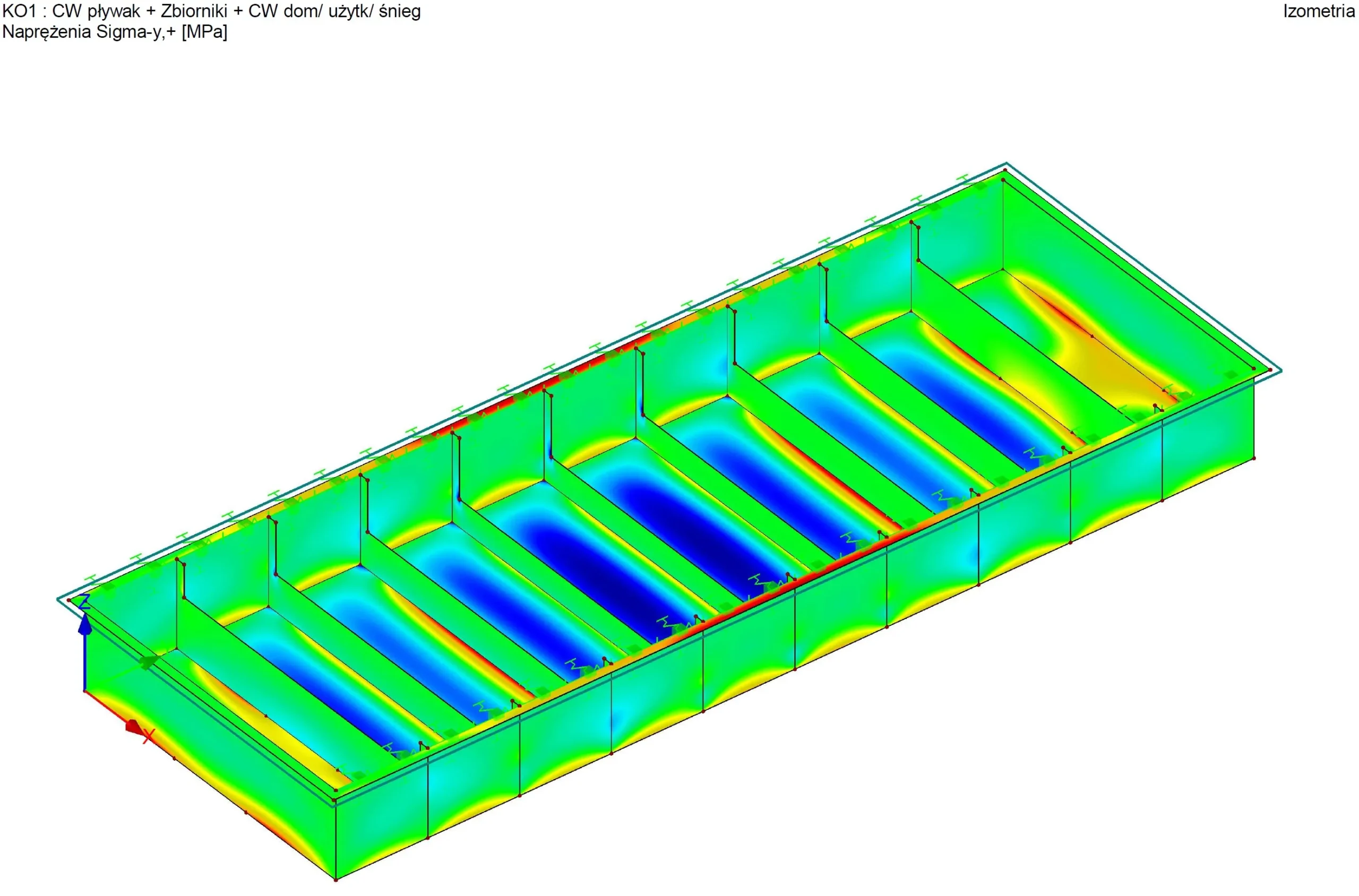
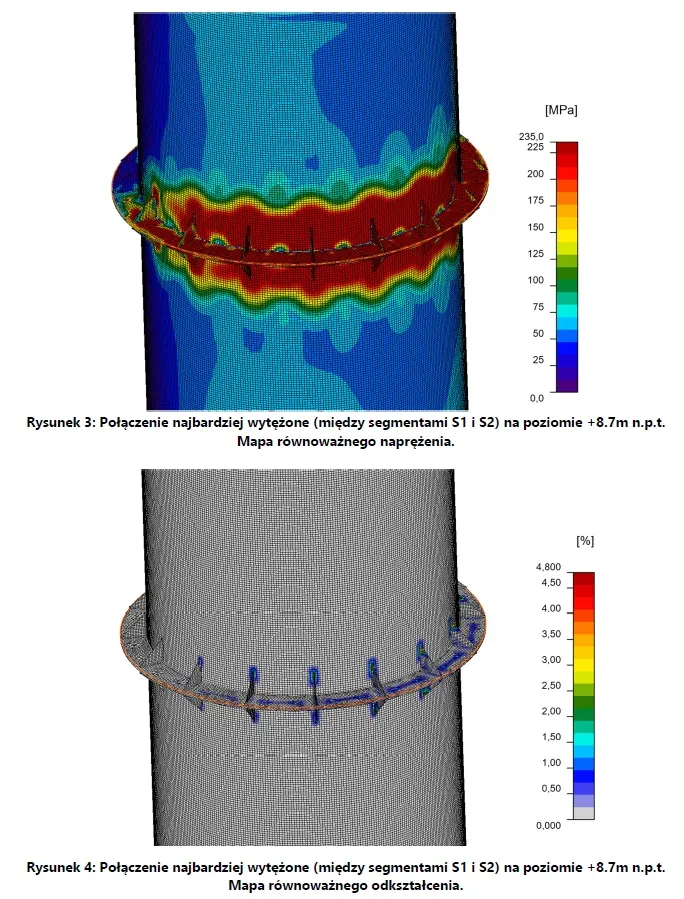
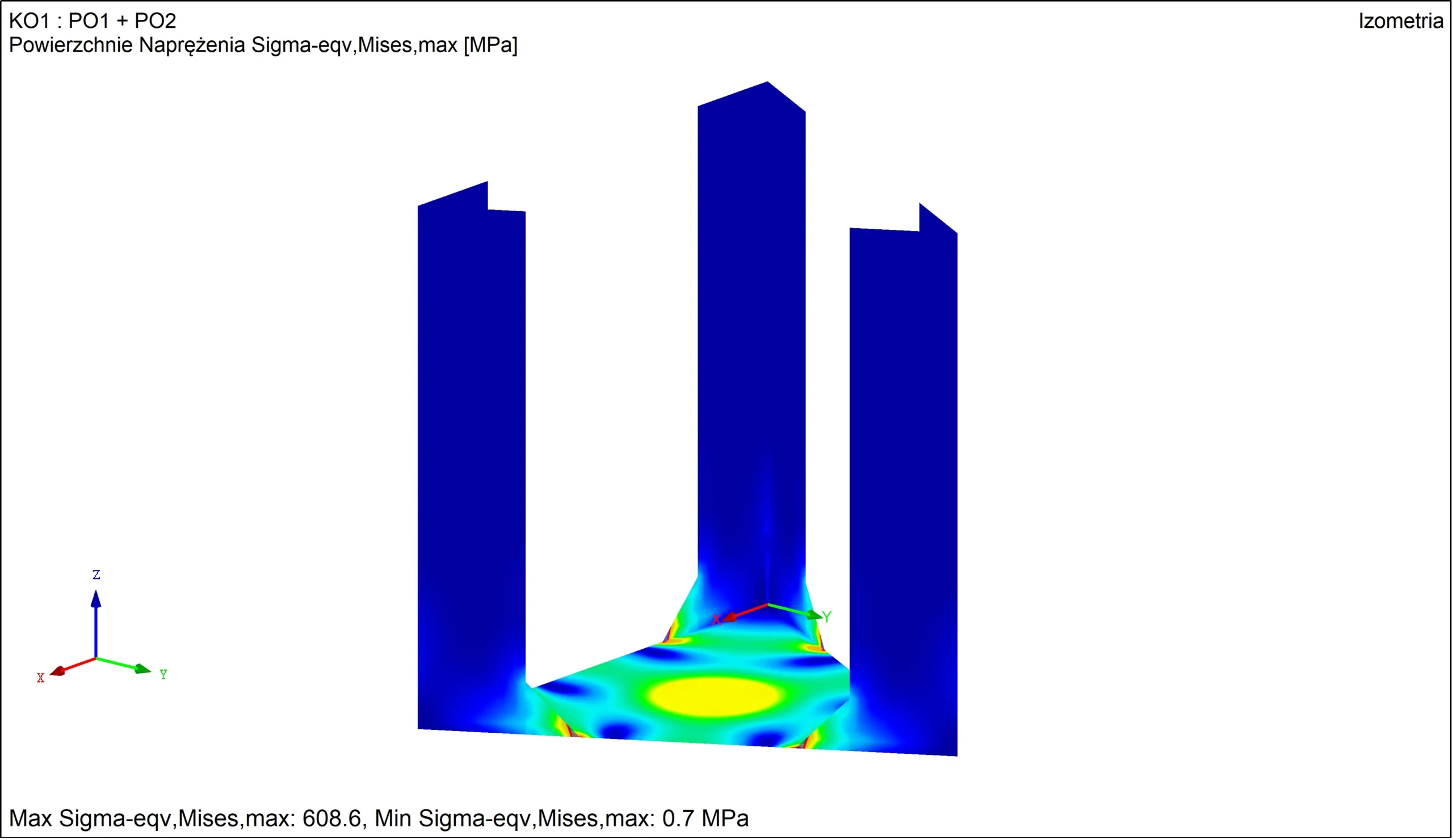
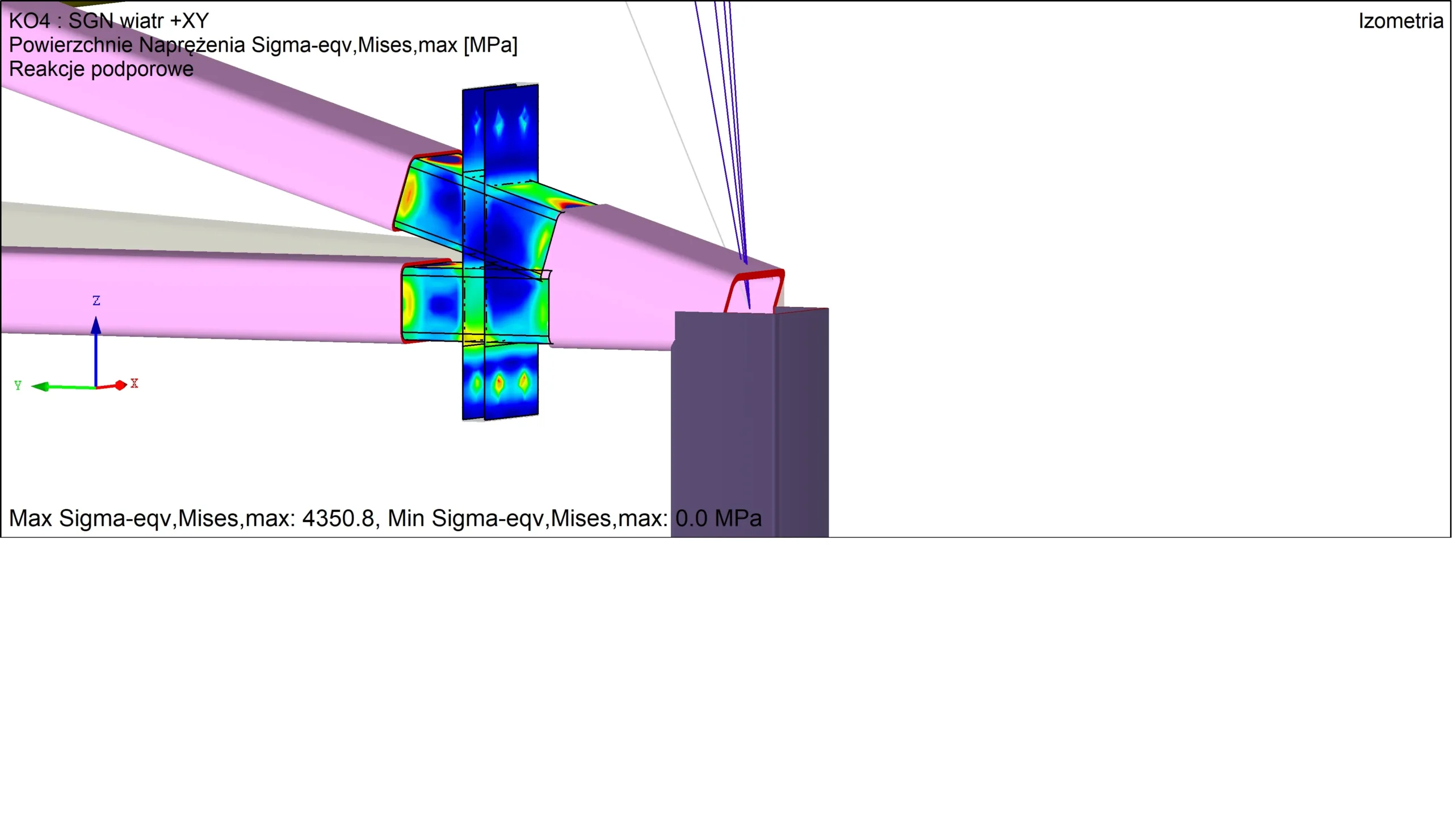
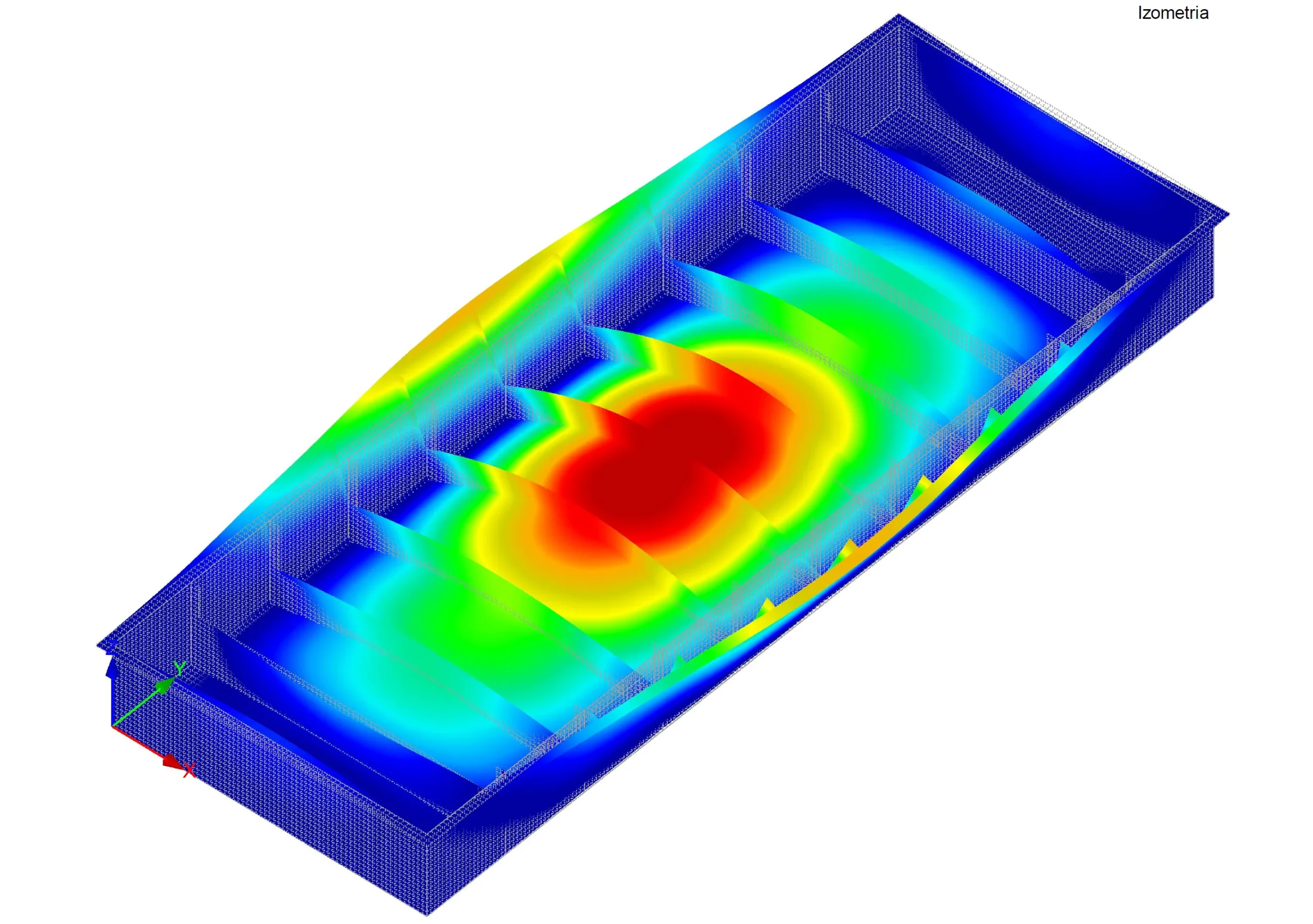
FEM strength analyses enable detailed analysis of structural details, verification of adopted design solutions, assessment of stress and deformation distribution within structures, analysis of the stiffness of elements and nodes, and much more. Where in-depth analysis is required, or the design solution is unusual or complex, advanced FEM analyses enable precise selection and evaluation of structural solutions.
FEM analysis services include:
- Linear and nonlinear static analyses of elements in bar, shell, and volumetric models
- Plasticity and stability simulations
- Contact, friction, and clearance modeling
- Verification of structural and element failures
- Shape and geometry optimization
Nonlinear FEM analyses
We perform FEM analyzes using the FEMAP program, which is based on the NASTRAN solver. We perform linear and non-linear FEM analyzes depending on your needs. Nonlinear FEM analyzes include geometric features (large deformations) or material features (plasticity), contact issues and stability. This makes it possible to verify the load-bearing capacity and safety of complex structural systems, also in emergency conditions. The result of non-linear analyzes are static balance paths that allow you to precisely see, understand and assess how the structure works and the form of exhaustion of the load-bearing capacity of the analyzed elements. The ability to implement imperfections in the model allows us to perform a full GMNIA analysis.
Photo gallery
FAQ
What is FEM analysis (Finite Element Method)?
FEM analysis is an advanced numerical method used to test the strength of structures, machines and engineering elements. It involves dividing the analyzed model into small finite elements, thanks to which it is possible to precisely determine the stresses, strains and critical points of the structure.
What are FEA calculations used for?
FEM calculations are used primarily for strength analysis of structures and optimization of engineering designs. This method allows you to check the behavior of the structure under the influence of various loads before making a prototype.
How does the finite element method work?
The finite element method involves dividing a geometric model into a mesh of many small elements for which mathematical calculations are performed. This allows you to accurately simulate the behavior of the entire structure under the influence of forces, temperature or vibrations.
What is the difference between linear FEA and non-linear FEM analysis?
Linear FEM analysis assumes small deformations and elastic behavior of the material. However, nonlinear FEA analysis takes into account more complex phenomena, such as large deformations, plasticity of materials or contact between structure elements.
What parameters can be analyzed in FEA simulations?
Using FEM analyses, you can determine, among others:
- stress distribution in the structure
- deformations of elements
- structure stiffness
- stability and stability of elements
- the influence of dynamic loads, vibrations and temperature
- This makes it possible to accurately assess the safety of the designed structures.
Can CFD analyzes replace wind tunnel tests?
In many cases, CFD simulations can act as the so-called virtual wind tunnel. They allow you to test different design variants and quickly analyze the impact of geometric changes on air flow. Physical tests are still used in the final stages of a project, but CFD significantly reduces their number.
What elements can be analyzed using CFD?
Both external and internal flows can be studied using CFD analyses. The analysis covers, among others:
- buildings and structures exposed to wind,
- ventilation and air conditioning installations,
- industrial equipment,
- flow channels and pipeline systems,
- aerodynamic elements in automotive or aviation.
In what industries are MES analyzes used?
MES analyzes are widely used in many industry sectors, such as construction, automotive, aviation, energy and the machinery industry. They allow you to design safe and optimal structures and reduce the risk of failure.
Does FEM analysis detect weak points in the structure?
Yes. One of the most important advantages of FEM analyzes is the ability to identify places of stress concentration and potential failure points. This allows the design to be optimized before production or construction.
What does the process of performing FEM analysis look like?
The FEM analysis process usually includes several stages:
- preparation of a CAD geometric model
- creating a mesh of finite elements
- defining materials and loads
- conducting numerical simulation
- analysis of results and preparation of a report
This approach allows you to accurately assess the behavior of the structure under various operating conditions.
What are the advantages of performing FEM analyzes at the design stage?
Performing FEM analyzes at the design stage allows you to reduce the number of physical prototypes and laboratory tests. Thanks to simulations, you can optimize the design faster, reduce material consumption and increase the safety of the structure.
Latest projects

Self-erecting, mobile telecommunications mast
